
Grow your brand with your next product
For amazon/ecomm brands that sell durable goods ready to scale.
We have 17+ years of experience developing unique products
The Product research era is over

In 2026, most brands don't fail. They get cloned out of the game.
At first, things work. They product sells. Ads convert. Margins look fine.
Then the "China Trap" snaps shut. Your supplier realizes your volume is good and launch a spin-off brand. Same features. Same materials. Half the price.
Then, more copy cats follow. Suddenly:
- Cost of Acquisition explodes.
- Your best-seller is now a commodity on Temu.
- You are sitting on 6 months of inventory you can't move.
our natural response is this...
Discounts, Bundles, Influencers. Burning cash to buy clicks in order to get some revenue.
It buys time. But you cannot out-market a product problem.
Many teams think the answer is "more SKUs". So they rush product research to find a new commodity product.
The Result? You don't have a brand. You have a catalog of commodities. There is no "Moat". No IP protection slowing competitors down. No reason for customers to pay a premium.
You are playing a game of "Arbitrage" that ended 3 years ago. Different products, same rigged game.


Scaling today
Isn't about building one-hit products. It's about building a product ecosystem.
Strong hardware companies don't just sell standalone products. They build ecosystems over time. Think of brands like ELGATO. One product is fine. Real value shows up when the their entire streaming system connects.
Apple does the same with all their tech too. This is why, they still haven't been replaced. In a smart hardware business, every product has a role:
- Some bring new customers in
- Some become the core product
- Some make other work better
- Some prepare customers for what comes next
Not every product needs to be a best-seller. But every product must strenghten the ecosystem.
When products work together:
- Customers buy the next one because it fits with what they already own. Value grows with each purchase.
- Leaving for a cheaper copy feels like a downgrade.
This creates pull. Your products stop fighting for attention. They start pulling customers inward.
That's why companies like Apple and LEGO and ELGATO are hard to compete with. They don't win on price. They win becasuse everything works better together.
Without this sytem:
- Everything feels like starting over
- Copycats keep catching up
- Growth stays exhausting
You don't need more products. You need an ecosystem.

Yes, this can be applied to your product-line too.
The Strategy
Stop guessing. Start building a map.
So you have to stop asking,
“What can we sell next?”
And instead start asking,
“What are we building toward?”
A real strategy answers simple questions:
- How does this product make our existing products stronger?
- Why is it harder for copycats to follow us here?
- Why does this make customers want the next product?
The solution to this is the map. But here’s the hard part:
A map only works if you keep updating it.
In the real world:
- Component costs change
- Shipping breaks
- Regulations shift
- New competitors appear overnight.
so instead of a map, you need a navigation system. This is what we call a portfolio engine.
This is your goal. However, before we can install a portfolio engine in your business, there's a milestone that must be achieved. And that is:
we first need to launch a breakthrough product.
This is what establishes credibility with customers and suppliers. Every compounding product line starts with one product that matters. Not a random SKU/ASIN but a Breakthrough Product that:
- Proves real demand
- Generates healthy margin
here are the steps to achieve this
step 1: come up with a designed to win concept
A concept that:
- Solves a real, validated problem
- Makes sense to manufacture and ship
- Is profitable at realistic volumes
- Creates defensible differentiation

step 2.Production-Grade Product Development
Once the concept is locked, you design, prototype, and engineer the product properly.
This includes:
- Detailed CAD and BOM optimization
- Supplier and tooling strategy
- Functional golden samples and demo-ready prototypes — not fragile builds.
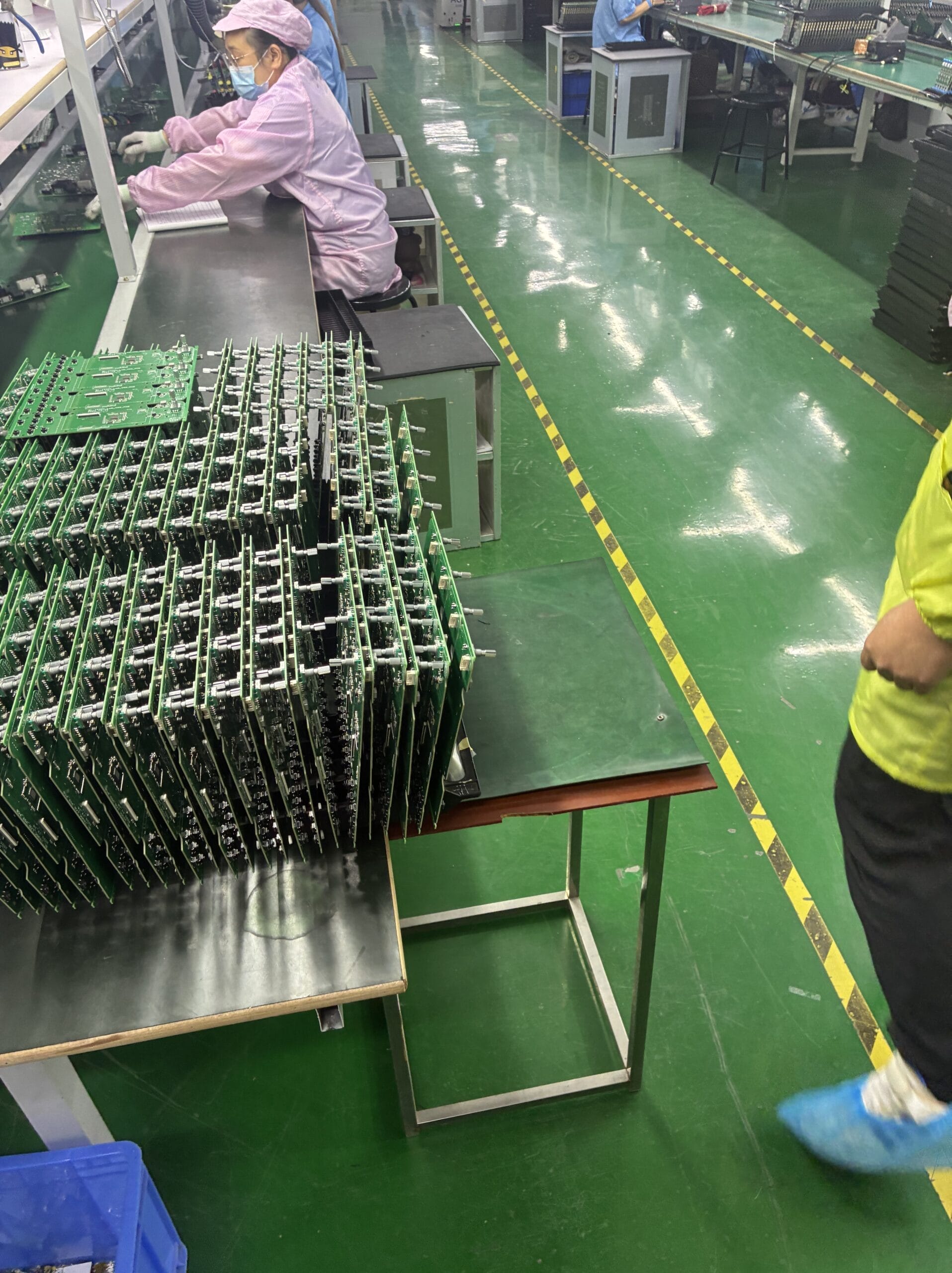
3. First Production & Launch Stabilization
This is where most hardware companies break. You need your product to get traction, recover your capital investment and generate a profit.
To facilitate this, we support:
- Supplier validation and pilot builds
- First-batch quality, cost, and yield
- Fixes when reality doesn’t match assumptions
- If needed, we go to the factory.
- In some cases, if the product is unique enough and if it has a general consumer appeal, then it also allows for a crowdfunding campaign. This can help mitigate the capital investment for the launch.
4. install a Portfolio Engine
Once the first product is stable, compounding begins.
Everything feeds an active Portfolio Engine:
- Proven suppliers and architectures
- Customer feedback and market data
- Pricing and logistics learnings
Each new product becomes:
- Cheaper to build
- Faster to launch
- Easier to sell
- And stronger as part of the ecosystem
This isn’t a static strategy. It’s an operating system for product creation.

From products to systems
We’ve helped teams:
- Turn ideas into fundable concepts
- Launch products that survive reality
- Build foundations for multi-product growth

Why work with IDW?
- We design hardware products as compounding product lines, not isolated products.
- We deliver the real IP: CAD, BOMs, prototypes, tooling strategy, and supplier-ready files. You have total ownership of designs, contacts, code, etc.
- We operate as your internal product development unit, long-term if needed.
- We search for ecosystem gravity, not just SKUs.
- We think in IP friction, not patents alone.
- We expect assumptions to change and design for course correction.
- We’re honest upfront: If it can’t compound, it’s not worth investing.